Living with chronic pain can affect much more than your physical comfort. It can interfere with sleep, work, movement and everyday activities.
When medicines and other non-surgical approaches do not provide adequate relief, some carefully selected patients may be considered for Radiofrequency Ablation (RFA).
But what exactly is RFA? Is it surgery? Does it permanently cure pain? And is it suitable for everyone?
Let’s understand the procedure.
What Is Radiofrequency Ablation?
Radiofrequency Ablation (RFA) is a minimally invasive procedure used in selected pain conditions.
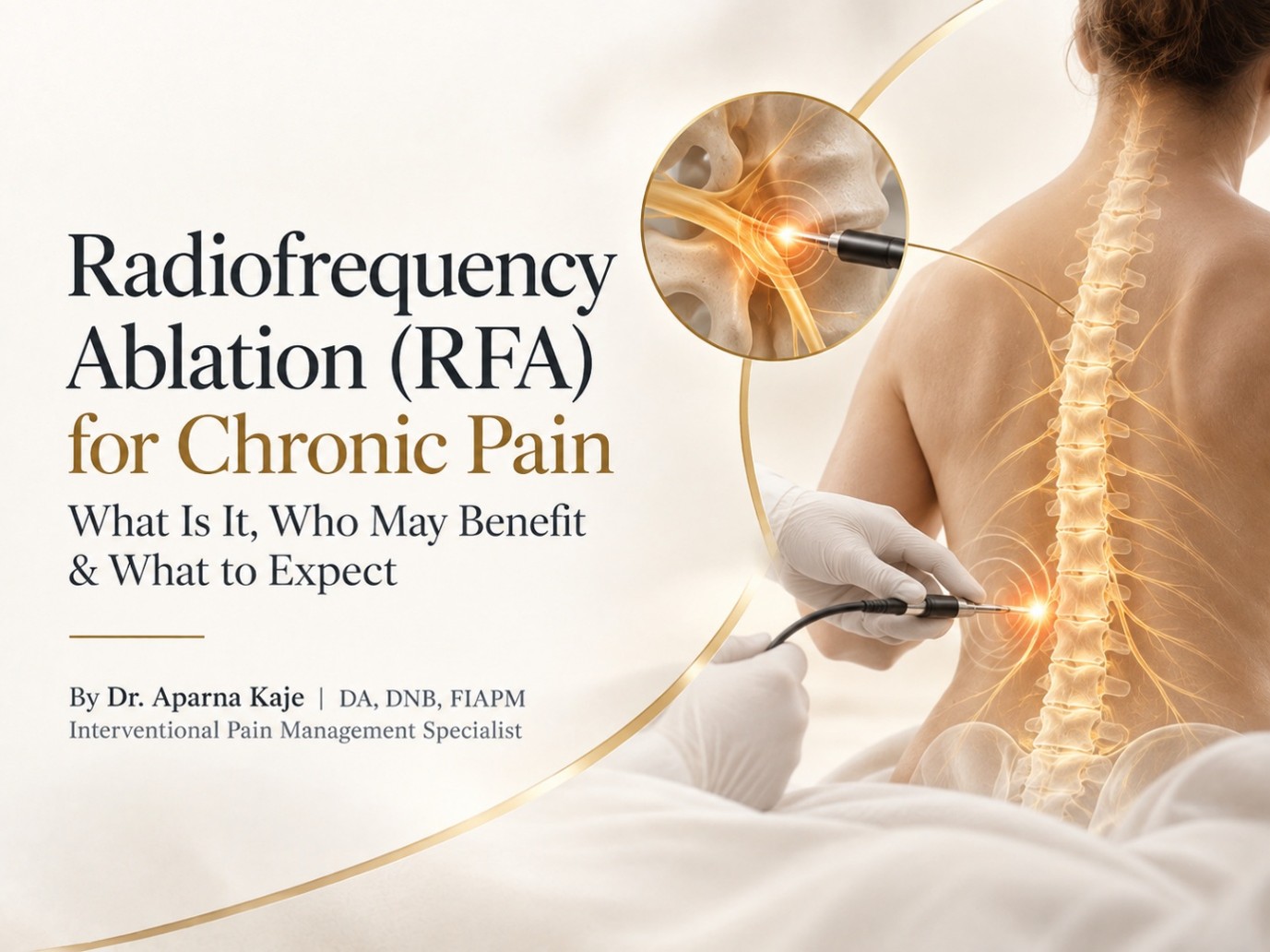
It uses radiofrequency energy to generate controlled heat around a targeted nerve or nerve branch that is contributing to pain. The aim is to reduce the nerve’s ability to transmit pain signals.
RFA is particularly used for certain types of chronic pain involving the spine and joints, including pain arising from facet joints in the neck or lower back.
It is important to understand that RFA is not appropriate for every type of pain. The source of pain needs to be identified before considering the procedure.
Is RFA a Surgery?
No.
RFA is considered a minimally invasive procedure, rather than conventional open surgery.
A thin needle is guided to the targeted area, often using imaging guidance such as fluoroscopy. Radiofrequency energy is then delivered through the needle to the selected nerve.
Because there is no large surgical incision, recovery is generally shorter than with conventional surgery. However, the exact procedure and recovery experience depend on the treatment area and the individual patient.
How Does RFA Help With Pain?
Pain signals travel through nerves from the affected area toward the brain.
During RFA, the targeted nerve tissue is treated with controlled radiofrequency energy. This can reduce the transmission of pain signals from that specific source.
The goal is not simply to “remove” pain. The broader goals may include:
- Reducing pain
- Improving movement and function
- Helping patients participate more comfortably in daily activities
- Reducing reliance on pain medication in appropriate cases
The response varies between patients and depends on the underlying cause and location of the pain.
Who May Be a Candidate for RFA?
RFA is generally considered only after a careful evaluation of the source of pain.
For example, NICE recommends considering radiofrequency denervation for selected people with chronic low back pain when non-surgical treatment has not helped and the pain is thought to originate from structures supplied by the medial branch nerves. NICE also recommends a positive response to a diagnostic medial branch block before performing radiofrequency denervation for this indication.
This is why patient selection is one of the most important parts of RFA treatment.
Your doctor may consider:
- Where the pain is located
- How long you have had the pain
- The suspected source of the pain
- Your symptoms and examination findings
- Previous treatments
- Your response to diagnostic injections or nerve blocks, when appropriate
Is RFA Only Used for Back Pain?
No.
RFA may be used for selected chronic pain conditions involving different areas, depending on the underlying diagnosis. It can be considered for certain neck, back and joint-related pain conditions and some other specific pain syndromes.
However, RFA should not be viewed as a general treatment for all chronic pain.
The right procedure depends on the right diagnosis.
Does RFA Permanently Cure Pain?
Not necessarily.
RFA is designed to provide pain relief, but it does not necessarily eliminate the underlying condition causing the pain.
The treated nerve can eventually recover or regrow, and pain may return in some patients. The duration of relief varies depending on the cause and location of pain and the individual’s response.
This is why it is better to think of RFA as a targeted pain-management treatment, rather than a permanent cure.
What Happens During an RFA Procedure?
The exact process can vary, but generally:
- Evaluation
Your doctor first assesses your symptoms and determines whether the suspected pain source is suitable for RFA.
- Diagnostic testing
For certain conditions, a diagnostic nerve block may be used to determine whether the suspected nerve is contributing to the pain. A positive response can help identify appropriate patients for RFA.
- Needle placement
During the procedure, a thin needle is carefully positioned near the targeted nerve using appropriate imaging guidance.
- Radiofrequency treatment
Radiofrequency energy is delivered through the needle to create a controlled lesion in the targeted nerve tissue.
- Recovery
Patients are generally observed for a short period after the procedure and can often return home the same day, depending on the procedure and clinical circumstances.
Is RFA Painful?
The procedure is performed with local anaesthesia to numb the treatment area. You may feel some pressure, discomfort or sensations during the procedure.
Some patients can also experience temporary soreness or discomfort at the treatment site after RFA.
Your doctor will explain what you can expect based on the specific procedure being performed.
How Long Does Pain Relief Last After RFA?
There is no fixed duration that applies to everyone.
Some patients experience relief for several months, while others may have a shorter or longer response. Cleveland Clinic notes that pain relief may commonly last around six to 12 months, although individual results vary considerably.
The treated nerve may eventually recover, which can allow pain to return.
If the initial procedure was helpful, repeat treatment may sometimes be considered depending on the diagnosis and clinical situation.
Are There Risks?
Like any medical procedure, RFA has potential risks.
These may include temporary soreness, numbness or discomfort around the treatment area. Less commonly, complications such as infection, bleeding or nerve injury can occur.
Your doctor should discuss the potential benefits, risks and alternatives with you before the procedure.
RFA vs Surgery: Are They the Same?
No.
RFA is a minimally invasive pain-management procedure, while surgery is used to correct or address specific structural problems.
RFA may be considered when the pain is coming from a suitable nerve source and the patient meets the appropriate criteria.
It does not mean that surgery is unnecessary for every patient.
If there is significant structural compression or another condition requiring surgical treatment, a surgical opinion may still be appropriate.
What Is the Most Important Thing to Know About RFA?
RFA is not a treatment you choose simply because you have chronic pain.
The first step is understanding where the pain is coming from and why it is happening.
Once the source is identified, your pain specialist can discuss whether treatments such as medication, physical approaches, nerve blocks, RFA or other interventions may be appropriate.
Don’t just ask, “Can RFA treat my pain?”
Ask:
“Is my pain coming from a source that RFA can actually target?”
That distinction matters.
When Should You Consult a Pain Specialist?
Consider getting your chronic pain evaluated if:
- Your pain keeps returning
- Pain is interfering with sleep or daily activities
- Medicines provide only temporary relief
- You experience persistent neck or back pain
- Pain is limiting your movement
- You have been advised to consider an interventional pain procedure
- You are unsure what is causing your pain
A proper diagnosis can help you understand your options and avoid unnecessary treatments.
Final Takeaway
Radiofrequency Ablation can be an effective pain-management option for carefully selected patients—but it is not suitable for everyone.
The success of RFA depends heavily on identifying the correct pain source and selecting the right patient for the procedure.
Don’t just treat the pain. Find the cause.
If you have persistent pain, consult a qualified pain specialist to understand the cause and the treatment options appropriate for you.
About Dr. Aparna Kaje
Dr. Aparna Kaje is a DA, DNB, FIAPM and Interventional Pain Management Specialist at Ashirwad Urology & Pain Management Centre, Kharadi, Pune.